A 1,5 year old shepherd female "Kalia" from Khevsureti with her first puppies.
Reisen in Georgien und darüber hinaus im Südkaukasus: Eintauchen in das Abenteuer, die Geschichte und die Kultur des faszinierenden Reiselandes Sakartwelo, Georgien mit Menschen, die das Land leben, lieben und schätzen.
28.10.2005
The joy of a mother
the essence of life, raising the small ones.

A 1,5 year old shepherd female "Kalia" from Khevsureti with her first puppies.
24.10.2005
Men without faces- a small fresco from Sveti Zkhoveli
Yesterday I found this fresco in the famous Georgian Church Sveti Zchoweli in Mtskheta. The scratched out faces of these Nobles did not harm the power of the image itself. It lets one feel an idea of Eternity.
Ovcharka from the Monks of Sedaseni
The Monks from Sedaseni are passionate breeders of pure Caucasian Ovcharki
22.10.2005
20.10.2005
What do you think is the best car for Georgia ?
This is my Nissan Patrol, he is like an old warhorse. 2.8 TD, the European Version made in Spain, built 1990. 7 years running in Germany (3 owners before myself) now 9 years in Georgia. He carried lots of folks through the Caucasus, sometimes donkeys, sometimes chicken or ducks, quite often sheep for shashlyk, very often my dogs, sometimes pigs, sometimes wine grapes, sometimes all that mixed. I changed the Turbo loader in 1999, overhauled the engine twice, but anyway I was astonished what big punches took my car without a scratch over the years. I really love him. But I consider to buy a new, I mean used, new one. I am keen on a Nissan Safari with a 4.2 Diesel Engine. But what you may suggest on the best car for use in Georgia and the Caucasus ?
19.10.2005
Ferries Italy Greece and vice versa
Going to Georgia the land way often one wants to make a part of the way on one of the ferries. Between Italy and Greece or Italy and Turkey. Here is the website you need to book your tickets: http://www.ferries.gr/
18.10.2005
Autumn in Georgia
Sometimes I would like to write as freewheeling and good in English as does Carpetblogger from Baku if I could. About the every day life in Georgia, about the trivia and peanuts, about what is on the first hand not that spectacular but on the second maybe just interesting. I love the people living in Georgia of all coleur, but sometimes I like very much the "simple" folks, the workers on the street, the old grandmother, who is selling cigarettes, the guy from Abkhazia, who changed the oil of my motor engine today. They live their fate and their fortune. If you find a common language, than there may be a deep understanding of each other, a simple trust, that they do their best work they can for your tyre or your engine. You listen to their weird stories, to their hopes and dreams.
I again bought those Russian tyres today- Medved (bear)- and after mounting them it was like driving a complete new car. Actually they lasted under the stress of three years Georgian roads much longer then my German Fulda tyres and are of course much cheaper- 140 Lari each appr. 80 USD instead of 260 USD what I paid in Germany, but those 80 $ are still more than the official monthly salary of a teacher. Buying the tyres on Eliava-Bazaar suddenly stood there a small crowd between the boxes around a dead man. His face looked very calm and peaceful. Somebody shifted a pillow under his head and everybody looked very sad. I asked somebody, the man died of a heart attack or a stroke and there waited for a physician and the police. It made me sad too under the bright sun of this October.
I bought a new calculator too, one was for 2,20 Lari and one for 3. I am impressed by Chinas productivity, my old one 3 years ago costed 15 then. So I took the one for 3 Lari in the hope of the better quality ;-)
Later I met a German journalist from Leipzig at McDonalds and we had some nice conversations about our different and similar lifes here and there. The coffee was good, thin, but hot. The girls behind the tender had a smile for us and my dirty hands. This was a quiet normal day in Georgia, I am glad that the kids are sleeping in their beds. Tomorrow comes a new day of this brilliant life in Georgia.
I post now some old photos from the deep grounds of my computer.

Bazaar Kabali, Region Lagodekhi Winter 2002 Photo: Joachim Strunk

Two friends, Rustavi Winter 2002 Photo: Joachim Strunk

Azeri Ladies on Gori Bazaar,Winter 2002 Photo: Joachim Strunk

Bazaar Kabali, Region Lagodekhi Winter 2002 Photo: Joachim Strunk
I again bought those Russian tyres today- Medved (bear)- and after mounting them it was like driving a complete new car. Actually they lasted under the stress of three years Georgian roads much longer then my German Fulda tyres and are of course much cheaper- 140 Lari each appr. 80 USD instead of 260 USD what I paid in Germany, but those 80 $ are still more than the official monthly salary of a teacher. Buying the tyres on Eliava-Bazaar suddenly stood there a small crowd between the boxes around a dead man. His face looked very calm and peaceful. Somebody shifted a pillow under his head and everybody looked very sad. I asked somebody, the man died of a heart attack or a stroke and there waited for a physician and the police. It made me sad too under the bright sun of this October.
I bought a new calculator too, one was for 2,20 Lari and one for 3. I am impressed by Chinas productivity, my old one 3 years ago costed 15 then. So I took the one for 3 Lari in the hope of the better quality ;-)
Later I met a German journalist from Leipzig at McDonalds and we had some nice conversations about our different and similar lifes here and there. The coffee was good, thin, but hot. The girls behind the tender had a smile for us and my dirty hands. This was a quiet normal day in Georgia, I am glad that the kids are sleeping in their beds. Tomorrow comes a new day of this brilliant life in Georgia.
I post now some old photos from the deep grounds of my computer.
Bazaar Kabali, Region Lagodekhi Winter 2002 Photo: Joachim Strunk
Two friends, Rustavi Winter 2002 Photo: Joachim Strunk
Azeri Ladies on Gori Bazaar,Winter 2002 Photo: Joachim Strunk
Bazaar Kabali, Region Lagodekhi Winter 2002 Photo: Joachim Strunk
13.10.2005
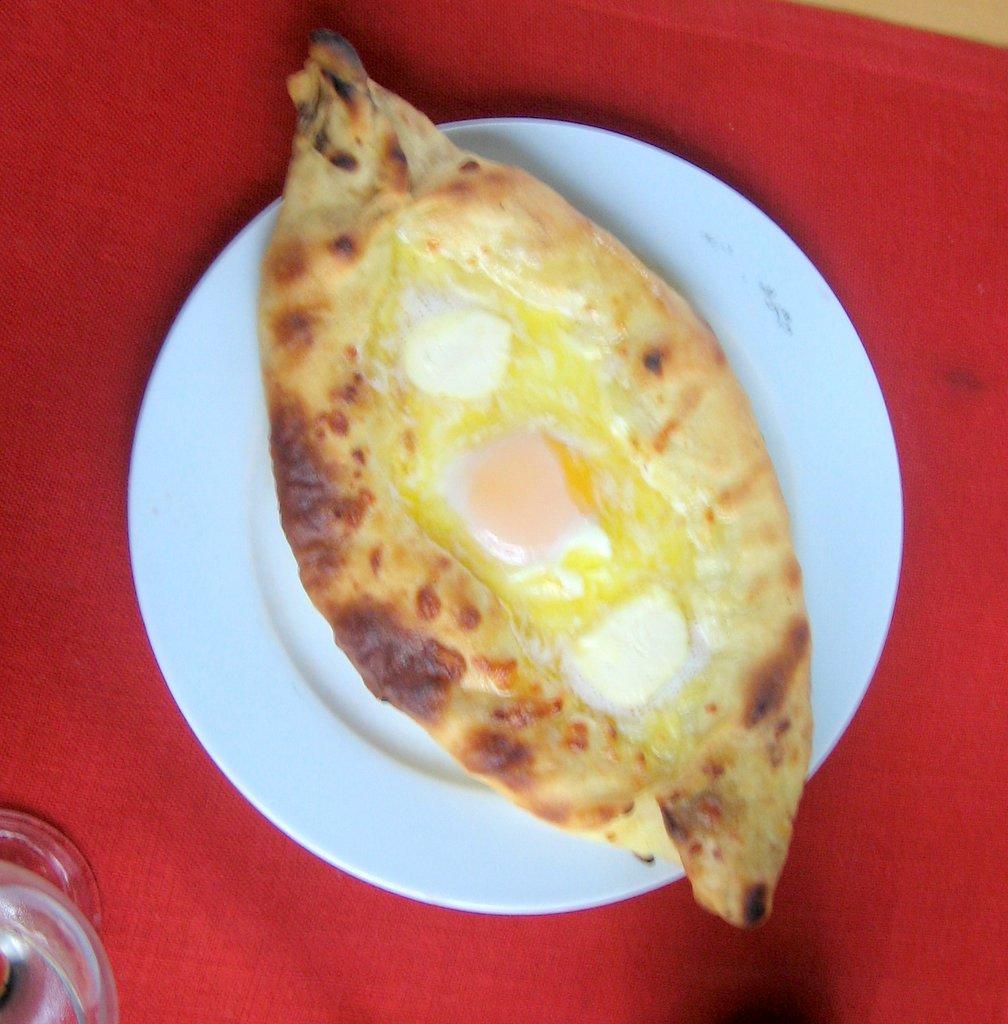
Adjarian Khatchapuri !!!
12.10.2005
4 Georgian still-lifes
1 Beefsteak, cheese, bread, wine
2 Prepared sheep meat for Shashlyk
3 Bread on a table
4 Kazbegi Beer, pears, water melons, champagne
Alvani, 2005
11.10.2005
Reisebericht Familienurlaub Georgien
Ein neuer Reisebericht über einen Familienurlaub mit Kindern in Georgien unter dem Titel "War es schön?" von Karin Kahlich befindet sich auf diesem Link.
10.10.2005
Images from Tusheti 2005
From time to time I will post some more impressions from Tusheti wich I took before and at our cattledrive with Tushetian shepherders this autumn. The first snow now closed the Abano-Pass already on 10th of October. If you are interested to book a tour to Tusheti next season from Mid-June to Mid-October 2006 please contact me at


Near Abano-pass on 2700 m

View on the Alazani-River

Shepherder resting

Milking in the evening

Four year old boy riding near Hegho

Sheep near Abano-Pass

Gogita, Sultan and their friend

View on Dartlo

Out of the window of a herders camp
Near Abano-pass on 2700 m
View on the Alazani-River
Shepherder resting
Milking in the evening
Four year old boy riding near Hegho
Sheep near Abano-Pass
Gogita, Sultan and their friend
View on Dartlo
Out of the window of a herders camp
Reisebericht Autoreise Osttürkei-Georgien
Wilhelm Siepe unternahm mit seinem Kumpel Tomi eine abenteuerliche und sehr schöne Reise von Köln nach Tbilissi mit einem Mercedes-Benz im September 2005. Lesen Sie den sehr ausführlichen Reisebericht hier: Link
08.10.2005
Gugula
Gugula became our good friend, always joking, a hard working shepherder, and a great singer of Georgian folk songs. He is origininally from Akhalsopeli in Kakheti. Now he works as a shepherder in Tusheti, in the winter at the winter pastures in Shiraki. In the background the great book of Lesley Blanch on Shamyl with the title " The sabres of paradise " No book fascinated me over the last weeks like this one. Here is a link to Amazon, but read also the interesting review there of Kakha.
Caucasian shepherd dogs- Ovcharki aboriginees Tuscheti
Female with puppies, 12 days old, on the journey the puppies are transportated in the saddle bags. Shepherder: Kakha
Hungry shepherd dogs waiting for their food at night, Tusheti, Georgia near Omalo October 2005
Batso
Patschara
Garindscha
18.09.2005
Our Georgian-German Kids
Hans (4) and Niza (3)

I am very proud on their new kindergarden: Till noon they speak Russian there, in the afternoon Georgian, 2-3 afternoons a week English. Every second day Georgian Dance Courses. 2-3 times a month comes a Georgian Children Theatre an visit. Thus, the kids are busy !
How to raise an Army
David IV also known as David the Builder
Source 1: Wikipedia
Problems began to crop up for David now, his population, having been at war for the better part of twenty years needed to be allowed to become productive again. As well, his nobles were still making problems for him, along with the city of Tbilisi which still could not be liberated from Arab grasp. Again David was forced to solve these problems before he could continue the reclamation of his nation and people. For this purpose, David IV radically reformed his military. He resettled a Kipchak tribe of 40,000 families from the Northern Caucasus in Georgia in 1118-1120. Every family was obliged to provide one soldier with a horse and weapons. This 40,000 strong Kipchak-army was entirely dependent on the King. Kipchaks were settled in different regions of Georgia. Some were settled in Inner Kartli province, others were given lands along the border. They were quickly assimilated into Georgians.
Source 2: Academician R. Metreveli, Tbilisi State University
To ensure quick movement King David the Builder increased the number of troops and cavalry detachments; he changed the strategy and tactics of warfare. The King especially favored the stratagem of luring the enemy into an ambush and effecting a surprise attack. Part of the Georgian army still depended upon big feudal lords, their will and wishes, and their relations with the king. At the same time incessant wars kept the most productive part of the population away from home and farming. The country's power depended not only on the organization of the army, but on economic regeneration as well. In view of this the need arose for creating an army of non-local population. The Crown settled some 40,000 families of the Polovtsy on Georgian territory. Presently they became integrated into the local feudal relations and each family gave one warrior, creating an army of 40,000 men. In this way King David sought to maximally limit the political rights of the feudal lords and to strengthen the royal authority. The settlement of the Polovtsy in Georgia in 1118-1120 and the creation of a standing army recruited from them made the king practically independent of Georgian feudal lords and strengthened the country as a whole.
But who have been those Polovtsy ? Those Kipchaks ? They fought endless battles against the Russians in Southrussia. A very good source on the history of those tribes I found here at http://www.redkaganate.org/ by Dmitriy V. Ryaboy. There also can be found a brilliant Timeline of the Russo-Polovetz Wars by Norman J. Finkelshteyn.
What says Wikipedia:
The Cumans, also known as Polovtsy (Slavic for yellowish) were a nomadic West Turkic tribe living on the north of the Black Sea along the Volga. They are identified with the Western branch of the Kipchaks. They invaded Southern Ukraine, Moldova, Wallachia and part of Transylvania in the 11th century and from here they continued their plundering of the Byzantine Empire, Hungary and Kievan Rus'. Full Article here
A few lines from Georgian History 1
1220-1230
In the 1220s and 1230s Mongol hordes appeared on the scene. Having conquered the north-eastern part of China (1211-1215), the Mongol leader Genghiz-Khan marched out against Central Asia, launching an offensive on Muhammad, Shah of Khwarazm (1200-1220).See The detachment of the Mongol army, led by Djebb and Subudai, the same detachment, that had made war on Muhammad and his son Jalal-ad-Din (1200-1231), attacked Georgia several times in the early 1220s. In 1222 the Georgians suffered defeat. Mongol invasions resumed in 1235. Prior to that Jalal-ad-Din, pursued by the Mongols, attacked Georgia. The Georgians lost the battle of Garnisi.(60,000 Georgian against 200,000 the Khwarazmians) The royal court with Queen Rusudan (1223-1245) moved to Kutaisi. A year later Jalal-ad-Din took Tbilisi. The people fought courageously, the city passing from hand to hand. In 1227-1228 Jalal-ad-Din attacked Georgia again. According to the chronicler, over 100 thousand lost their lives when the city fell to the Khwarazmians for the first time. They were compelled to change religion and become Muslims, but no one did it and thus almost the whole population of Tbilisi was assassinated.
From the magnificent History of Georgia by Academician R. Metreveli, Tbilisi State University, see the whole article here
In the 1220s and 1230s Mongol hordes appeared on the scene. Having conquered the north-eastern part of China (1211-1215), the Mongol leader Genghiz-Khan marched out against Central Asia, launching an offensive on Muhammad, Shah of Khwarazm (1200-1220).See The detachment of the Mongol army, led by Djebb and Subudai, the same detachment, that had made war on Muhammad and his son Jalal-ad-Din (1200-1231), attacked Georgia several times in the early 1220s. In 1222 the Georgians suffered defeat. Mongol invasions resumed in 1235. Prior to that Jalal-ad-Din, pursued by the Mongols, attacked Georgia. The Georgians lost the battle of Garnisi.(60,000 Georgian against 200,000 the Khwarazmians) The royal court with Queen Rusudan (1223-1245) moved to Kutaisi. A year later Jalal-ad-Din took Tbilisi. The people fought courageously, the city passing from hand to hand. In 1227-1228 Jalal-ad-Din attacked Georgia again. According to the chronicler, over 100 thousand lost their lives when the city fell to the Khwarazmians for the first time. They were compelled to change religion and become Muslims, but no one did it and thus almost the whole population of Tbilisi was assassinated.
From the magnificent History of Georgia by Academician R. Metreveli, Tbilisi State University, see the whole article here
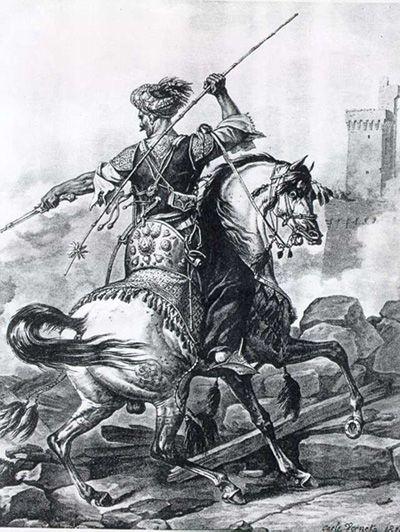
Rustam Razmadze- the Mamluk

Roustan or Rustam, is the nickname of Napoleon Bonaparte's famous bodyguard Rustam Razmadze. Rustam was born in Tbilisi, and was considered to be Georgian. Rustam was kidnapped when he was a child and sold as a slave in Cairo. One of the local authorities presented a young slave to General Napoleon Bonaparte in 1798. Thus, Rustam (French form: Roustan) became a bodyguard of Napoleon till 1814, when the former married Mademoiselle Douville in Dourdan, France and refused to follow the Emperor in his exile to Elba.
Mamluks (also Mameluks, Mamelukes) (the Arabic word usually translates as "owned") comprised slave soldiers used by the Muslim caliphs and the Ottoman Empire. On more than one occasion they seized power for themselves.
After being converted to Islam, they were trained as cavalry soldiers. While technically after training they were no longer slaves, they were still obliged to serve the Sultan. They were kept by the Sultan as an outsider force, under their direct command, to use in the event of local tribal frictions. Many Mamluks rose to high positions throughout the empire, including commanderships. Status remained non-hereditary at first and children were strictly prevented from following their fathers. The intensive and rigorous training given to each new recruit helped ensure a great deal of continuity in Mamluk practices.
Read further on Wikipedia about the fascinating history of the Mameluks
17.09.2005
Shepherders driving cattle near Sagarejo
Autumn, the most beautiful time in Georgia for me. This year on September13th, I have met my first shepherders on the road, between Sagarejo and Badiauri in Kakheti. Those fellows had been very kind, driving 1500 sheep from Bakuriani in the Lesser Caucasus to Gurjani, their winter pastures and homeland in Kakheti. I want to bee a shepherder too, despite the hard life those guys have. End of this month, I will take part in a cattle drive of 2600 sheep from Tusheti down to Kakheti. For the road itself we will need approximatly 6 days. Be sure to get more photos then.


Man, how much I love Georgia and how much I love Freedom and Georgias Freedom. Tavisupleba !
German watching Stalin
Hey, I have rarely seen Germans in Georgia without any interest in the remaining statues of Stalin in various Georgian villages and cities. This one is situated in Zemo Alvani, the main village of the Tushetians in the Kakhetian Valley. It also shows some Tushetians, who died in WW2. I think there have been many more sufferings by Tushetians in that war then the few ones shown there.
11.09.2005
Caucasus Lily from Borjomi-Kharagauli National Park
Dr.Hans Buhr 2005
My father has a brilliant website about Plant Galls. As a Botanic he traveled across Georgia and together we plan to organize a Special Journey through the best places of Georgia for Botanics and Flora Enthusiastics in June 2006. Soon to be more details on my Travel Website http://www.kaukasus-reisen.de about the Journey "Spring Flora Caucasus"
10.09.2005
New Blog: Caucasus-Pictures by Henning Tappe
My friend and former colleague Henning Tappe from Lübeck shot thousands of brilliant photos during his frequent stays in Georgia. He started a new blog now: http://caucasus-pictures.blogspot.com/
to post them and to give some descriptions about their origin. Henning is married to his Georgian wife Tamriko, they have a beautiful 3-years-old daughter Sopiko together.
05.09.2005
03.09.2005
02.09.2005
Georgischer Tanz der Spitzenklasse
Vom 1. Dezember 2005 bis zum 2. Februar 2006 wird die weltberühmte Georgian State Dance Company Sukhishvili in mehr als 50 deutschen und belgischen Städten auftreten. Mehr Informationen zu den Terminen und Veranstaltungsorten auf diesem Blog: http://ballett-sukhishvili.blogspot.com/

New York Post, USA
Republique, Frankreich
Le Point, Frankreich
Abonnieren
Posts (Atom)